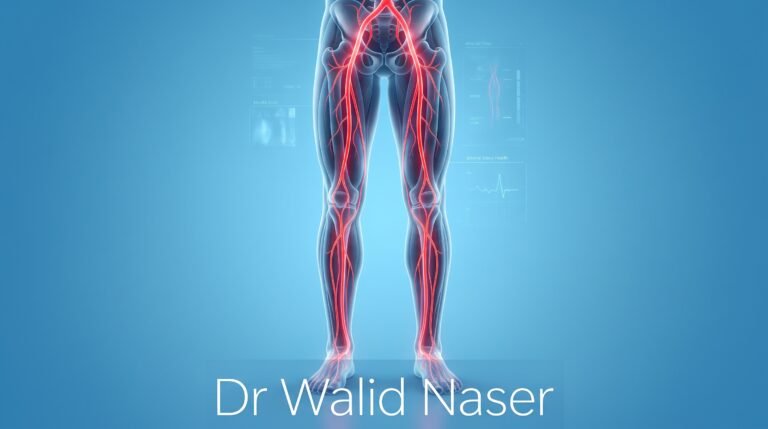

Leg pain when walking that comes on after a similar distance each time and eases within minutes of rest may be a sign of narrowed leg arteries, a symptom called intermittent claudication. Treatment depends on the cause and usually starts with controlling risk factors and regular walking; some patients may need a catheter procedure or surgery after an examination.
Note: This article is general education and does not replace an examination. If a leg suddenly becomes cold, pale and very painful, go to the emergency department immediately.
What is intermittent claudication?
When you walk, your leg muscles need more blood. If the arteries are narrowed, not enough blood gets through, and the muscle starts to ache, cramp or feel heavy.
The pain usually stops when you stand still for a short while, then comes back after a similar distance. This repeating pattern is typical of artery-related pain.
Signs that point to the arteries
- The pain is usually in the calf, but can be in the thigh or buttock.
- It starts after about the same distance each time and is worse uphill or on stairs.
- It eases when you stand and rest, without needing to sit or bend your back.
- Your foot may feel cold or the pulse may be weak.
- You have risk factors such as smoking, diabetes, high blood pressure or high cholesterol.
Other causes of leg pain when walking
Other conditions can cause similar pain, which is why an examination is needed:
- Narrowing of the spinal canal in the lower back: pain often eases when sitting or leaning forward.
- Knee or hip arthritis: pain is linked to joint movement and may be present at rest.
- Varicose veins and venous insufficiency: heaviness and swelling that build up with long standing and ease when the legs are raised.
- Muscle or nerve problems.
If you notice heaviness and swelling with bulging veins, the varicose veins treatment page may help.
How does the doctor find the cause?
Your doctor will ask where the pain is, when it starts and what eases it, then check the pulses in your legs and feet and the colour and warmth of your skin.
Your doctor may compare the blood pressure at your ankle with your arm, or request a Doppler ultrasound to locate any narrowing. If the cause is not in the arteries, you may be referred to the right specialty.
What can help?
- Stopping smoking, one of the most important steps to protect the arteries.
- Regular walking: walk until the pain is moderate, rest until it passes, then carry on. Over time this helps many patients.
- Controlling diabetes, blood pressure and cholesterol with your doctor's guidance.
- Medicines prescribed by your doctor for your situation.
- A catheter procedure or surgery when symptoms are severe or limit daily life, or when blood flow is more seriously reduced.
The treatment options are explained on the leg artery blockage treatment page. You can also read about atherosclerosis in the legs.
When should you not wait?
- Foot pain at rest, or at night, that wakes you up.
- A sore on the foot or toes that does not heal, or toes turning dark.
- Sudden coldness and paleness of the leg with severe pain or numbness: this is an emergency, go to the emergency department immediately.