
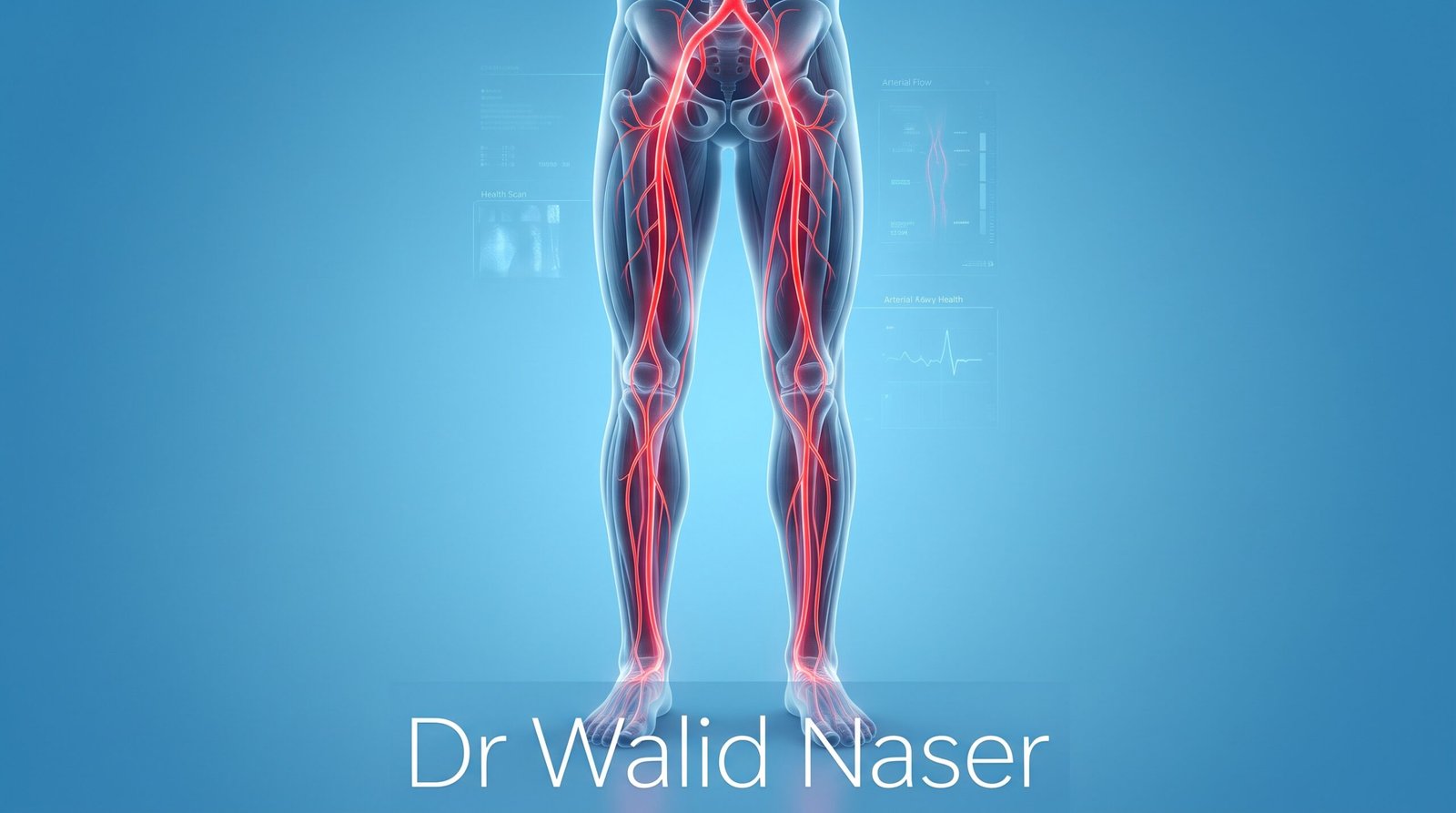
Atherosclerosis in the legs is a slow build-up of fatty deposits inside the walls of the leg arteries, which narrows them and reduces blood flow to the muscles and skin. Treatment usually starts with controlling risk factors, lifestyle changes and regular walking, and some patients may need a catheter procedure or surgery depending on their examination.
Note: If a leg suddenly becomes cold, pale and very painful, or you lose feeling or movement in it, go to the emergency department immediately. Do not wait for an appointment.
What is atherosclerosis?
Arteries are flexible tubes that carry oxygen-rich blood from the heart to the rest of the body. Over time, fat and calcium can build up on their inner walls and form deposits called plaques.
Plaques make the artery narrower and stiffer. When this happens in the leg arteries, it is called peripheral artery disease (PAD). It is closely related to the hardening of the arteries that affects the heart and brain.
Why does it happen? Risk factors
There is no single cause. Several factors raise the risk, and the risk grows when they add up:
- Smoking in any form, one of the factors most strongly linked to leg artery disease.
- Diabetes, especially when it is not well controlled.
- High blood pressure.
- High cholesterol and blood fats.
- Getting older and a family history of heart or artery disease.
- Lack of physical activity and excess weight.
What symptoms can appear?
Atherosclerosis can cause no symptoms for a long time. As the narrowing increases, you may notice:
- Pain, cramping or tiredness in the calf or thigh when walking that eases with rest.
- One foot feeling colder than the other.
- Changes in the colour or shine of the skin on the foot, and less hair on the leg.
- A weak pulse in the foot when examined.
- Sores on the foot or toes that heal slowly.
- Foot pain at rest, especially at night when lying down.
Pain at rest and wounds that do not heal are signs of more severe reduced blood flow and need prompt assessment. Read more about critical limb ischemia.
How is it diagnosed?
Diagnosis starts with a talk about your symptoms and risk factors, followed by an examination and checking the pulses in your legs and feet.
Your doctor may compare the blood pressure at your ankle with your arm, or request a Doppler ultrasound to see where the narrowing is and how severe it is. Some patients may need a CT scan of the arteries before treatment is planned.
What are the treatment options?
Treatment depends on how severe the symptoms are, where the narrowing is and your general health. It starts with the simplest steps:
- Stopping smoking and controlling diabetes, blood pressure and cholesterol with your doctor's guidance.
- A regular walking programme, which helps many patients walk further.
- Medicines prescribed by your doctor to lower the risk of clots and protect the arteries.
- Opening the artery with a catheter and a balloon, sometimes with a stent.
- Bypass surgery to reroute blood around the blockage when a catheter procedure is not suitable.
Learn more on the leg artery blockage treatment page and the peripheral artery angioplasty page.
When should you see a doctor?
- If walking regularly causes leg pain that goes away with rest.
- If you have diabetes or smoke and notice a change in the colour or warmth of your foot.
- If a sore on your foot is not getting better.
- If your foot hurts when you lie down.
Early assessment helps protect the leg. It is also a chance to look after your heart and brain, because atherosclerosis rarely affects only one place.